
What was the 1914 Christmas Truce?
Posted by Josh on 22nd Dec 2025 in the blog in the christmas category
- Share:
-

-

Introduction
‘It’ll be over by Christmas.’
This was the line which officers, politicians and family members alike issued to reassure British soldiers on their way to the battlefields of France and Belgium in 1914. After all, before the conflict that would later become known as the First World War, most wars had been relatively limited in scope, scale and duration.
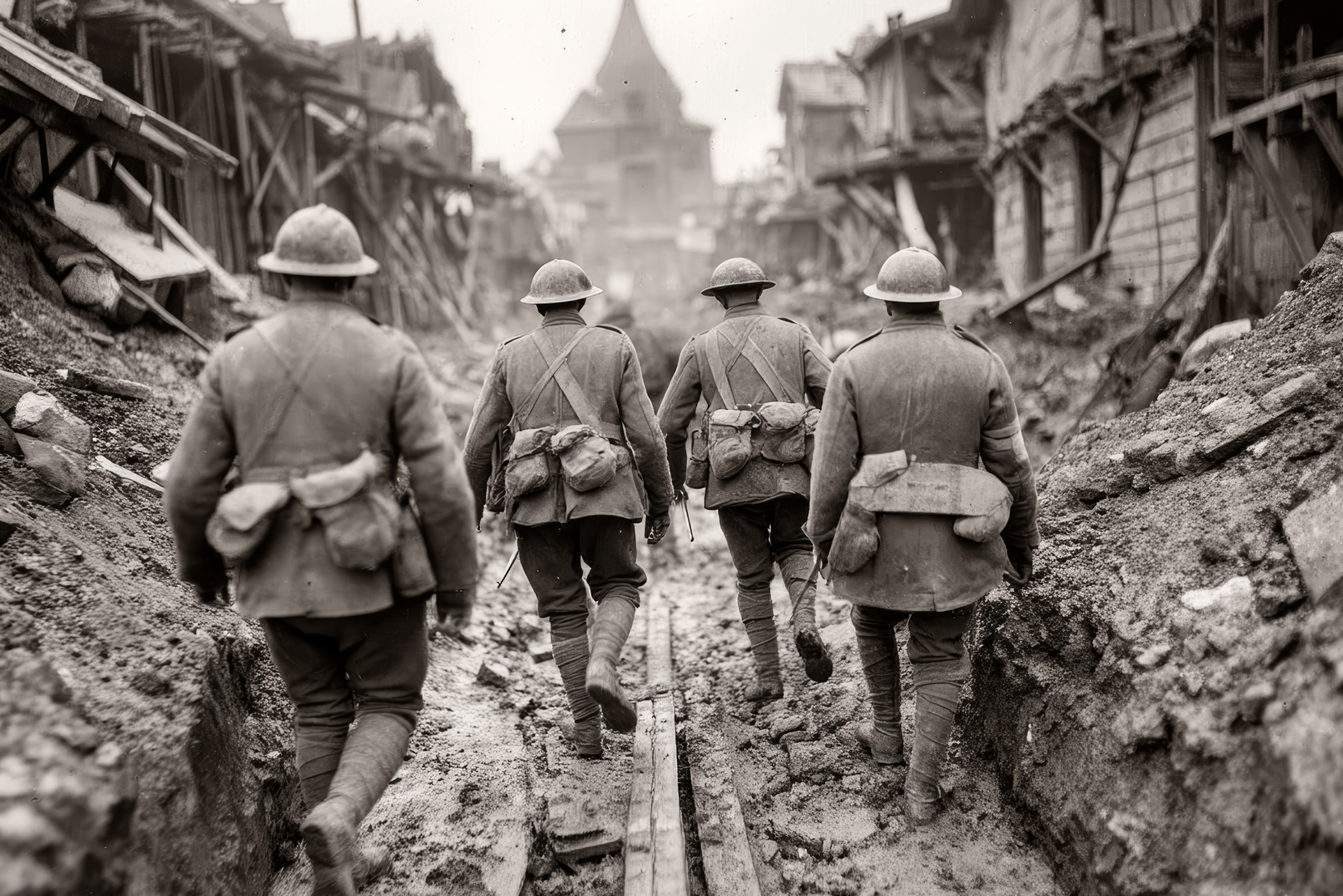
The war was declared in July 1914 when Germany invaded Belgium as part of its plan to attack France. By December, it had become clear that this was no ordinary territorial war, and that the war would not end before Christmas. Soldiers on both sides of the battlelines had become fatigued and often traumatised by the horrors they had witnessed first-hand in the trenches of Ypres, Artois and the Aisne. But it was from this weariness and trauma, amid so much mud and death, amid the nightmarish waves of artillery fire, that a brief moment of peace and fraternity was allowed to blossom.
What was the Christmas Truce?
As Christmas approached, and the battles raged on, the soldiers became increasingly aware of the festivities they were missing out on. Then as now, Christmas was a joyful occasion for family get-togethers, plentiful food and much needed rest from the torments of ordinary life. Though they were at war with one another, the soldiers on either side of the Western Front had this annual celebration in common, which allowed them to set aside their differences for much of the festive season.
The Christmas Truce - Trêve de Noël, in French - was piecemeal, beginning shortly before Christmas Day when German soldiers decided to decorate their trenches with small Christmas trees and candles. They sang Stille Nacht ('Silent Night'), and French and British troops recognised the tunes - even if they didn‘t recognise the German lyrics - and joined in from across no-man’s-land.
Before long, soldiers started to emerge from their trenches with their hands raised to show that they were not carrying weapons. Soon they were shaking hands, sharing cigarettes and showing one another photographs of loved ones. In some instances they exchanged prisoners; in others they even exchanged gifts. Impromptu football matches sprang up, distilling the brutal conflict into a peaceful, playful sport.
The truce wasn’t ordered by the soldiers’ superiors, who were generally against it for strategic reasons. Indeed, Charles de Gaulle, who would become president of France between 1959 and 1969, and was a lieutenant at the time, described the situation as ‘lamentable’.
How long did the truce last?
Of course, the truce was only temporary. Having begun shortly before Christmas Day, it was over by New Year's Eve, when the festive cheer was over. In many places it only last a couple of days, and in some battlefronts it simply didn't happen at all.
The truce was not repeated in subsequent years, though there were a few attempts by soldiers to revive the festivities in 1915. Nor was it repeated in the Second World War, when hostilities were at an all-time high.
The Christmas Truce in the media
The truce was immortalised in a 1962 short story by the British writer - and soldier of the First World War - Robert Graves. In Graves' telling of events, the Germans won the football match 3-2 against British troops.
The event has also been depicted in the 2005 French film Joyeux Noël as well as the British TV shows Doctor Who and Blackadder.
Want to keep in the loop? Sign up to our newsletter!
Stay up to date with the latest content, blogs, videos and sales information from Learn French With Alexa.

Check out some of our other blog posts!

What are the days of the week in French?
Posted on by Josh in the vocabulary categoryFrom lundi to dimanche
Read the blog
The best quotes about Paris
Posted on by Josh in the french culture categoryIf you're visiting Paris for the first time, you may find yourself lost for words. Luckily for you, Paris has inspired many quotes that may help you articulate your own feelings about the city.
Read the blogHave fun learning French Today
People from all over the world enjoy learning French with Alexa Polidoro’s popular French audio and video lessons.