
How to buy a house in France
Posted by Josh on 7th Apr 2026 in the blog in the french culture category
- Share:
-

-

Have you ever dreamed of buying a property in France, but don’t know where to start? Our step-by-step guide explains the process in simple terms, telling you everything you need to know.
Whether you want to move for work, retirement or a change of lifestyle, the process is largely the same. When it comes to purchasing property, foreign nationals are treated the same as French or EU citizens, although non-EU buyers will require a visa or residence permit (carte de séjour) if they want to live in the property for more than 90 days at a time. They may also face stricter lending criteria and additional administrative checks, particularly when applying for a mortgage.
It’s also important to note that buying property doesn’t make it easier to get residency or fast-track your application.

Finding a property
The hardest step can often be the first one. Do you know where you want to live? Do you know what kind of property you’re looking for? Do you know what kind of things you should be looking out for before making the decision to purchase?
When it comes to price, there’s a huge disparity between different regions in France. For example, the average cost of a house in rural areas such as central France can be under €150,000, while properties in Paris can easily exceed €10,000 per square metre. Even within a city like Paris, average prices differ dramatically between different parts of the city.
Beyond price, you should also take into account the property's location, nearby transport links and distance to local amenities, schools and your place of work, particularly if you are relocating for employment.
Fortunately, there are few wrong choices when it comes to choosing where to live in France. The country benefits from excellent infrastructure, including well-connected autoroutes - high-speed TGV rail links and reliable public transport systems. However, if you choose to live in a rural area, you will likely need a car.
Getting your finances in order
Before you follow the process any further, you need to know you can afford the property. If you can’t pay in cash, you may still be able to secure a mortgage, even as a foreigner. However, some banks will only lend up to 70%–80% of the property’s value to non-EU citizens.
There are also additional fees you should be aware of, including:
- Notary fees (typically 7–8% for older properties)
- Agency fees (if applicable. Often around 5% of the purchase price)
- Mortgage arrangement fees (often around 1% of the purchase price or less)
- Currency exchange costs (if buying from abroad)
Arrange viewings
To arrange a viewing, you’ll typically need to contact the estate agent or seller directly, either by phone or email. If you’re abroad, many agents also offer virtual viewings.
It’s advisable to visit the property in person if possible and to view multiple properties before making a decision. Viewing the property in person will give you a much better sense of the place, and the estate agent will be on hand for any questions you have.
Review the Dossier de Diagnostic Technique (DDT)
Before making an offer, you should review the Dossier de Diagnostic Technique (DDT). The DDTis a set of mandatory technical reports provided by the seller, which may include:
- Energy performance certificate (DPE)
- Asbestos and lead reports
- Termite inspection (in certain regions)
- Electrical and gas safety checks
Reading through these documents can help you understand the condition of the property and any potential risks that may come with it.
Make an offer to purchase
If you've reviewed all the documents and are happy to proceed, you'll need to submit an offre d’achat, or written offer. This is a document which contains the proposed purchase price, conditions such as mortgage payments and a proposed timeframe for the completion of the purchase. Once accepted by the seller, the offre d’achat is legally binding.
Choose a notary
Once the seller has accepted your offer, you must then appoint a notary to handle the legal process. Both parties can share a notary, or each can appoint their own. The role of the notary is to prepare the relevant contracts and ensure that the transaction is fully legal.
Sign the compromis de vente and acte de vente
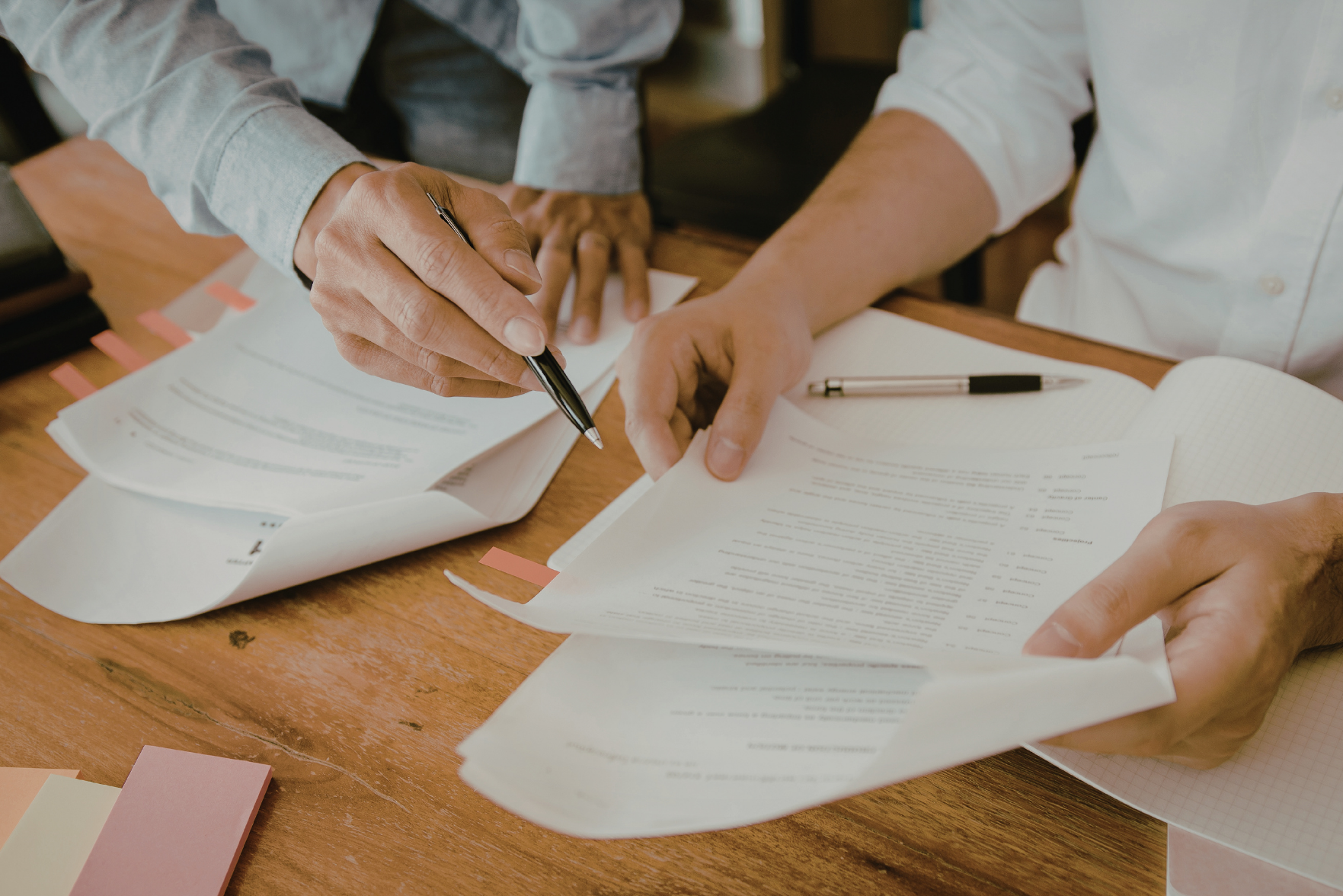
Both parties will need to sign a compromis de vente, with which you will agree to purchase the property at the agreed price. After this is signed, you as the buyer cannot be gazumped, meaning the seller won't be able to accept a higher offer from someone else. You will also need to pay a deposit, typically between 5% and 10% of the total purchase value. However, as the buyer you can still withdraw your offer provided you do so within a ten-day period, in which case you will not lose your deposit. After this cooling off period, you may only withdraw your offer under strict conditions, for instance if you are suddenly unable to pay the mortgage.
After the notary has carried out the appropriate checks, you'll also need to sign the acte de vente, which is a deed of sale. Doing so officiates the transfer of property from the seller to you, the buyer. Make sure that any outstanding fees and duties are paid before this point.
The signing typically happens in the notary's office, although you can sign via power of attorney if you are not in France at the time. You will then be given the keys to your new property!
Related vocabulary
| English | French |
|---|---|
| House | une maison |
| Property | une propriété |
| Mansion | un manoir |
| Cottage | une maisonnette |
| Flat/apartment | un appartement |
| Detached house | une maison individuelle |
| Semi-detached house | une maison mitoyenne |
| Motorway/highyway | une autoroute |
| Deed of sale | un acte de vente |
| Written offer | une offre d’achat |
| Notary | un notaire |
| Keys | les clés |
Want to keep in the loop? Sign up to our newsletter!
Stay up to date with the latest content, blogs, videos and sales information from Learn French With Alexa.


Check out some of our other blog posts!
How to use the auxiliary verbs Être and Avoir
Posted on by Josh in the learning french, vocabulary categoryÊtre and Avoir are two of the most important words in French. Do you know when to use these auxiliary verbs?

Personal pronouns in French
Posted on by Josh in the learning french, french grammar categoryDiscover the different French personal pronouns and how they're used
Read the blogHave fun learning French Today
People from all over the world enjoy learning French with Alexa Polidoro’s popular French audio and video lessons.