
How to order at a restaurant in French
Posted by Josh on 19th Jan 2026 in the blog in the tips, travel & tourism, french food category
- Share:
-

-

If you find yourself in France, chances are you'll be dining at a restaurant or two during your stay. Not only is eating at restaurants a great way to sample the best of France's world-renowned cuisine - it's also one of the best ways to put your French speaking skills into practice.
Waiters are used to serving tourists who may not be fluent in French, so there's nothing to lose by trying out your bonjour and merci (unless you end up with a pork steak instead of beef; more on this further down...). However, there are some key differences in etiquette, restaurant customs and general communication that can confuse non-natives.
That's why we've set out this guide to demystify the experience of ordering food in a French restaurant.
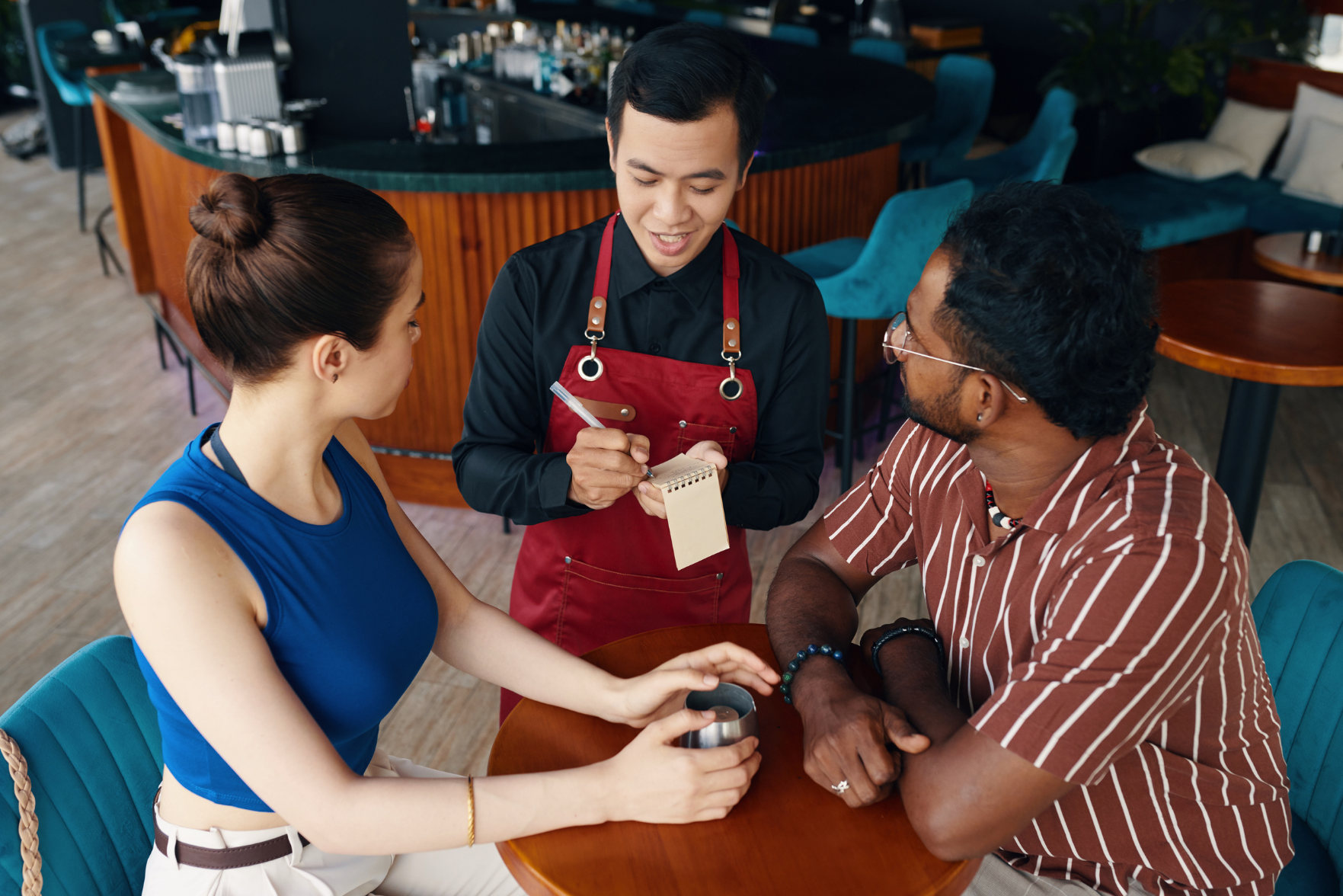
What is the etiquette for eating at a French restaurant?
- Dress accordingly - Casual clothes are fine for causal bistros and brasseries, but the dress code tends to be more formal for upmarket restaurants.
- Book in advance - If you want to avoid disappointment, try and make a reservation in advance.
- Politeness is key - Remember to use vouvoiement instead of tutoiement, in order words vous instead of tu. Say s'il vous plaît instead of s'il te plaît, for instance.
- Decide which menu you want - You may be familiar with the terms prix fixe and à la carte. These are, of course, French in origin, and refer respectively to a fixed price menu or menu in which you can choose as many dishes? you like. In France, it's common for restaurants to have both menus.
- Breaking bread - Restaurants often serve a (free) bread basket at the start of a meal. You may be tempted to slice it with your knife, but proper etiquette dictates that you should break it with your hands.
- Asking for the bill/check - To ask to pay, say L’addition, s’il vous plaît !
- Tipping - Service is often included in the bill/check, but you can leave an additional tip at the end of the meal if the service was especially good. Somewhere between 5 and 10 percent of the overall bill/check is a good bet.
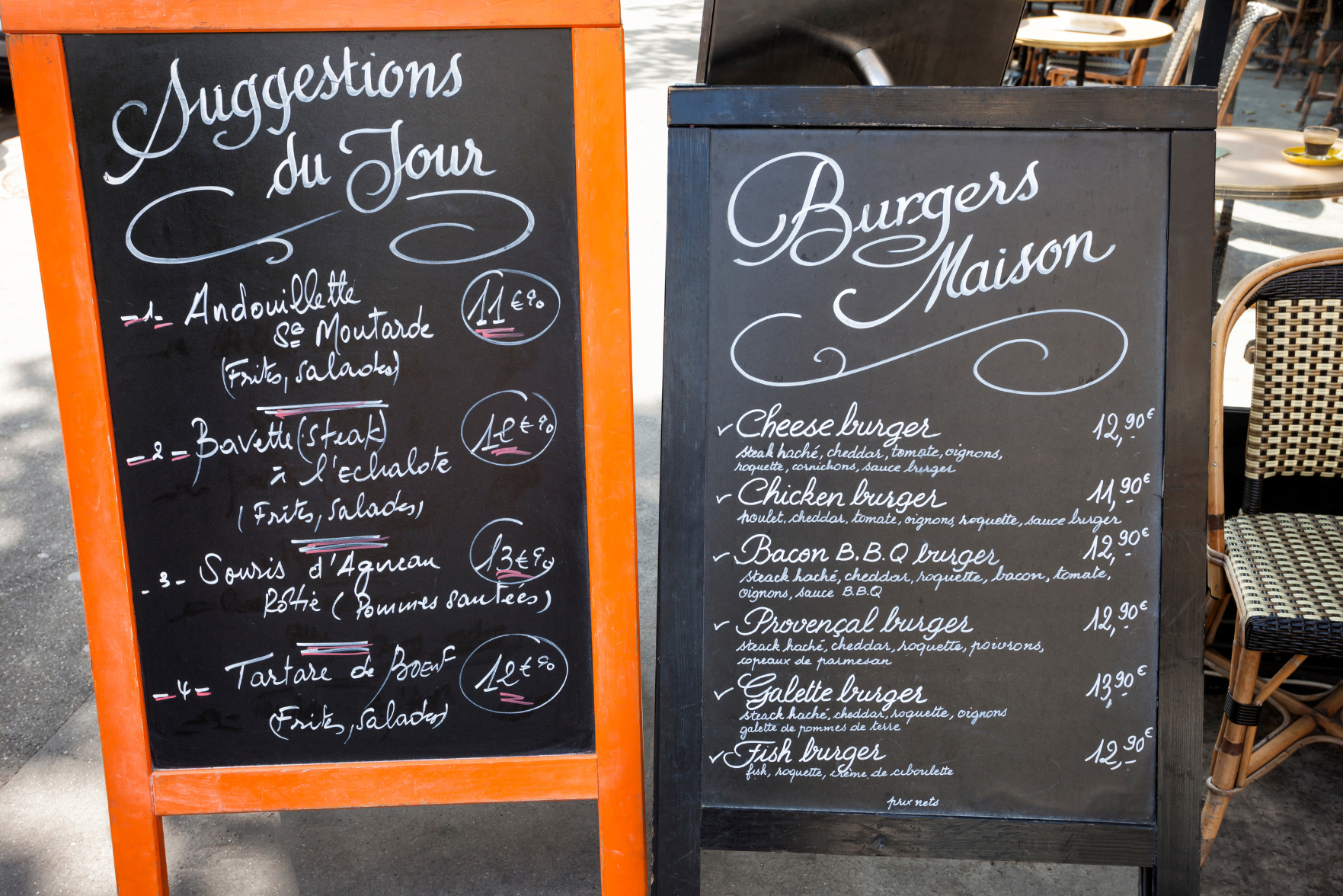
Common mistakes people make when ordering in French
❌ Je veux
✅ Je voudrais/Je vais prendre
Remember to use the conditional form of 'vouloir'. Instead of saying 'je veux la soupe' ('I want the soup'), say 'je voudrais la soupe' (I would like the soup') or 'je vais prendre la soupe' ('I'm going to have the soup').
❌ Le garçon
✅ Le serveur
The word for 'waiter' in French is serveur, but it can also be translated as garçon de café. Often in films or other media, this is shortened to simply garçon, meaning 'boy', but this can be considered quite rude in France today. If you want the waiter's attention, simply use the phrases s’il vous plaît or excusez-moi.
❌ Le menu, s’il vous plaît
✅ La carte, s’il vous plaît
Menu is something of a false friend in French, where it typically refers to a set meal. Ask instead for la carte.
❌ Filet mignon
✅ Filet de bœuf
Filet mignon exists in France, but it usually refers to a cut of pork or veal, so you may end up with a different meat from the one you had in mind. What is known as filet mignon in America is referred to as filet de bœuf in France, or filet pur in Belgium.
Facts about French restaurants
- There are around 45,000 restaurants in Paris alone.
- The French tend to eat a bit later than native English speakers may be used to. It's common for restaurants to open at around 7 in the evening and close as late as midnight.
- Many restaurants are Chez Pierre, Chez Bruce etc. In French, chez translates roughly as 'at the house of', so it's the French equivalent of a restaurant being called 'Pierre's' or 'Bruce's'.
- The word 'restaurant' comes from the French word restaurer, meaning to restore, or to dine. The origin of the word can be traced to a restorative soup that was originally served at these establishments.
- The Michelin Guide, now known worldwide for the famous star ratings they provide for top-tier restaurants, started life in France in 1900 as a free guide to help drivers find good places to eat and repair their tires.
Want to keep in the loop? Sign up to our newsletter!
Stay up to date with the latest content, blogs, videos and sales information from Learn French With Alexa.

Check out some of our other blog posts!

How many times has France won the World Cup?
Posted on by Josh in the french culture categoryDo you know the last time France won?
Read the blog
A beginner's guide to French wines
Posted on by Josh in the french food categoryEverything you've ever wanted to know about French wine
Read the blogHave fun learning French Today
People from all over the world enjoy learning French with Alexa Polidoro’s popular French audio and video lessons.