
Outdated French words that are no longer in use
Posted by Josh on 1st Jun 2026 in the blog in the vocabulary category
- Share:
-

-


The French language is always evolving. Thanks to slang, the influx of foreign loanwords and new technologies, ideas and pop culture coinages, new words are constantly being added to the language, while others are falling out of usage.
The major dictionaries in French add hundreds of new words each year. Le Petit Robert, for instance, has just added 150 new words for its 2027 edition. While they never remove words, they will often mark many words as obsolete after a period of time where they haven't been used, and those words are less likely to make it to new editions of the dictionary. As Géraldine Moinard, lexicographer for Le Robert, writes, 'Les suppressions sont un peu plus fréquentes dans des ouvrages de petit format, où le volume limité et les contraintes de lisibilité ne permettent pas de « serrer » le texte à chaque ajout.' ('Deletions are somewhat more frequent in small format books, where limited volume and readability constraints do not allow for "tightening" the text with each addition.')
As a French learner, it isn't always easy to know which words are no longer used. If they feature in your pocket dictionary, or in resources for learners such as Alexa's Vocabulary lists, then they're very likely still in usage, and common enough that you'll encounter them in everyday language.
However there are many words which you may have encountered which are less common in spoken French than they used to be, while some are altogether obsolete. You may have encountered them in old movies or books without realising that they're considered passé by modern French speakers. It's worth being aware of these if you want to avoid sounding old-fashioned (or even if that's exactly what you want to do!).
La boum
Boum is an onomatopoeic word which can mean a 'boom', in the sense of a loud bang, but it can also mean a 'party'. This second definition, popular in the '60s and '70s, is falling out of favour, however. Nowadays, people tend to say fête when referring to a party.
Le souper
Not to be confused with 'super', souper means 'supper', but most people nowadays say dîner. There are regional exceptions: 'souper' is still common in the East of France, Switzerland and Quebec, for instance.
La bricole
Bricole, from which we get the word 'bricolage', means a trifle or something generally insignificant. Once common, it mostly survives in literary contexts.
La chandelle
Chandelle used to be a common word for 'candle', before it got supplanted by la bougie. However, it still survives in some French expressions, such as tenir la chandelle ('to be a third wheel') and brûler la chandelle par les deux bouts ('to do something to excess', or 'burn the candle at both ends').
Naguère
Meaning 'recently', you'll only likely encounter naguère in literary or archaic contexts.
Sacré bleu
This is technically two words, but it's such a popular phrase (outside of France, at least) that it needs to be put in context. The expression means something like 'Oh God!', and gained currency at a time when invoking the word dieu (god) was widely considered to be blasphemous. The solution was to use a word that rhymed instead. Hence Sacré dieu became Sacré bleu.
Similar expressions include Corbleu !, Morbleu ! and Ventrebleu ! All very uncommon these days...
Want to keep in the loop? Sign up to our newsletter!
Stay up to date with the latest content, blogs, videos and sales information from Learn French With Alexa.


Check out some of our other blog posts!

French slang words to use in 2026
Posted on by Josh in the french culture, learning french categoryFrench slang is always evolving. Keep up to date with the latest slang words being used in the Francophonie
Read the blog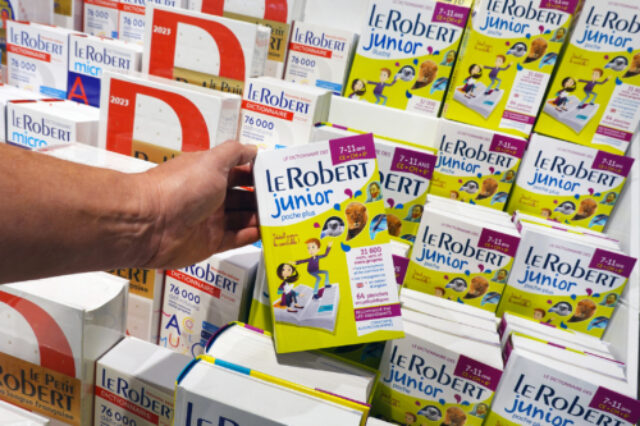
How do new words get added to the French dictionary?
Posted on by Josh in the categoryEver wondered how new words get chosen?
Read the blogHave fun learning French Today
People from all over the world enjoy learning French with Alexa Polidoro’s popular French audio and video lessons.