
French cognates
Posted by Josh on 26th Jan 2026 in the blog in the french grammar category
- Share:
-

-

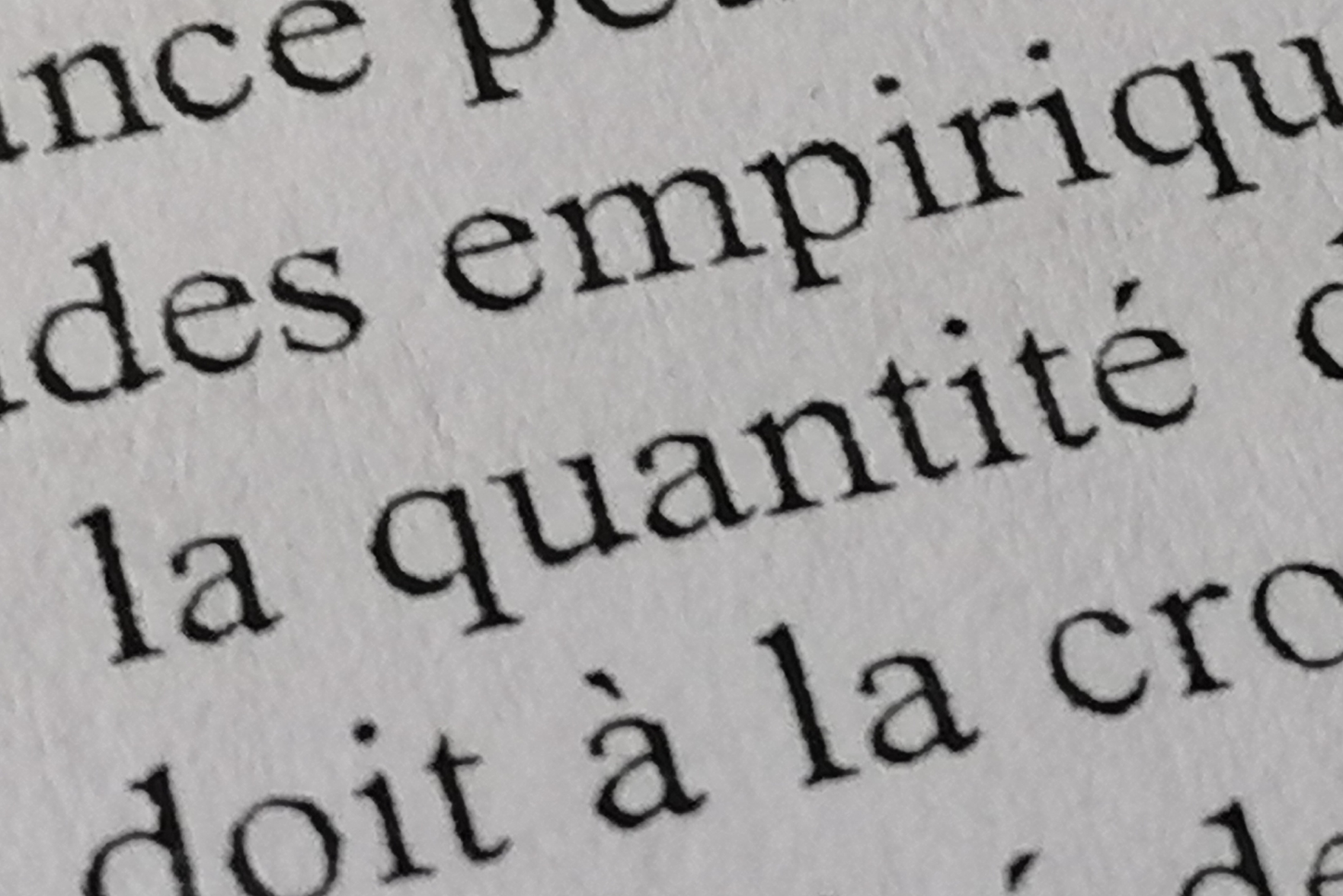
One thing that makes French a relatively easy language for English speakers to learn is the amount of cognates between the two languages.
A cognate is a word that has the same root as a word in another language. As a result, they often look and sound the same. Some cognates look similar, such as nombre and 'number', while some are identical (what we call 'homophones'), such as 'position' and 'position'. Since they share a root, cognates often have the same, or at least a similar, meaning (although this isn’t always the case; see the note on ‘false friends’ further down).
Be careful, however. Just because a word is spelt the same way in English and French doesn’t mean it’s pronounced the same way, and this is often what slips up English speakers when it comes to speaking and listening to French.
French pronunciation
French pronunciation can often be radically different from English pronunciation.
possible (say 'poss-ee-bluh') — possible
région* (say 'reh-dzee-on') — region
président (say 'preh-see-don') — president
*The letters 'r' and 'g' are pronounced more softly in French than they are in English. Read more in our guide here.
If you want to master French pronunciation, check out Alexa's playlist of pronunciation guideson youTube.
Why are so many words the same in French and English?
Around 30% of English words are French in origin. This is because when the Normans invaded England in 1066, they brought their language with them. The language we now recognise as English is a mix of Old French and Anglo-Saxon, as well as a few other languages such as Norse, Latin and Greek. Many of the cognates you see in English today can be traced back to the Norman Conquest.
French’s status as a prestige language throughout the 18th and 19th centuries also resulted in many French words being adopted directly into English. These are what we call loanwords, and unlike cognates they are generally spelt and pronounced the same in English as they are in French. Examples include 'baguette', 'avant-garde', 'déjà-vu' and 'cliché'.
French cognates
Below are some of the most common cognates found in French. You can learn these quickly and easily, but that doesn't mean you should ignore them completely. After all, you still need to be familiar with each of the words on this list in order to know that they're a cognate in the first place, and in some cases the spelling and pronunciation are different.
| French | English |
|---|---|
| la raison | reason |
| la politique | politics |
| la cause | cause |
| le groupe | group |
| le problème | problem |
| le rapport | report |
| le service | service |
| la situation | situation |
| le projet | project |
| l’idée | idea |
| le nombre | number |
| l'ambition | ambition |
| la motion | motion |
| la réservation | reservation |
| l’histoire | history |
| la fonction | function |
| la condition | condition |
| l’international | international |
| le système | system |
| la société | society |
| l’entreprise | enterprise |
| le million | million |
| le prix | price |
| le terme | term |
| l’information | information |
| le détail | detail |
| la liberté | liberty |
| la création | creation |
| le programme | programme |
| l’action | action |
| la relation | relation |
| la recherche | research/search |
| la forme | shape/form |
| la décision | decision |
| le rôle | role |
| le produit | product |
| la position | position |
| le développement | development |
| l’économie | economy |
| l’effort | effort |
| la population | population |
| l’organisation | organisation |
| la structure | structure |
| la justice | justice |
| la production | production |
| la sécurité | security |
| le contrôle | control |
| le débat | debate |
| la culture | culture |
| la communication | communication |
There are a few general rules that determine how cognates translate from English into French
Words that end in -tion in English generally end in -tion in French too. E.g. information - information
Words that end in -ic in English generally end in -ique in French. E.g. fantastic - fantastique
Words that end in -ity in English generally end in -ité in French. E.g. authority - authorité
Words that end in -ly in English generally end in -ment in French. E.g. rapidly - rapidement
False friends
False friends are words which look the same in two languages but have totally different meanings. Sometimes their resemblance is a coincidence, as is the case with 'chair', which means 'flesh' (the word for chair in French is chaise). More often, however, they share an etymology but their meanings have diverged over time, as is the case with journée in French (day) and 'journey' in English.
It's important to familiarise yourself with false friends, as these can often catch out even advanced learners of French. Read more about them in our blog on false friends.
Want to keep in the loop? Sign up to our newsletter!
Stay up to date with the latest content, blogs, videos and sales information from Learn French With Alexa.


Check out some of our other blog posts!
Être sur le point de
Posted on by Josh in the french grammar categoryHow and when to use this key expression in French
Read the blog
How many people speak French?
Posted on by Josh in the frequently asked questions, news categoryFrench is now officially the 4th most spoken language in the world
Read the blogHave fun learning French Today
People from all over the world enjoy learning French with Alexa Polidoro’s popular French audio and video lessons.